

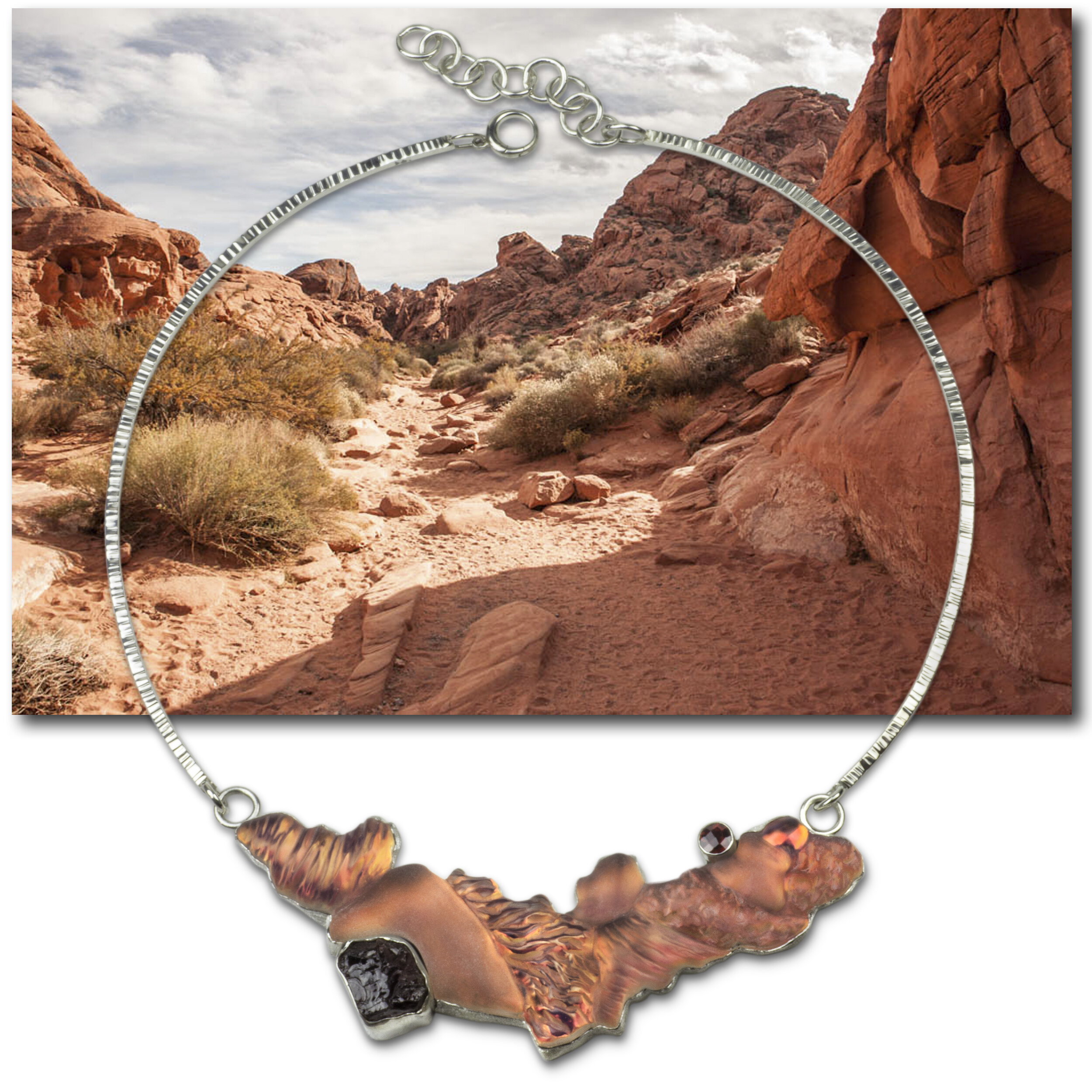

A conscious choice about materials brought me to glass mid-career. What I found was something far bigger than sustainability. Coming to it felt like falling in love, with its history, its renewability, and its quiet magic. Solid yet fluid in spirit, glass has the ability to capture movement as if still in motion. In an age of technology replacing the human hand, I turn instead to a centuries-old cold working process.
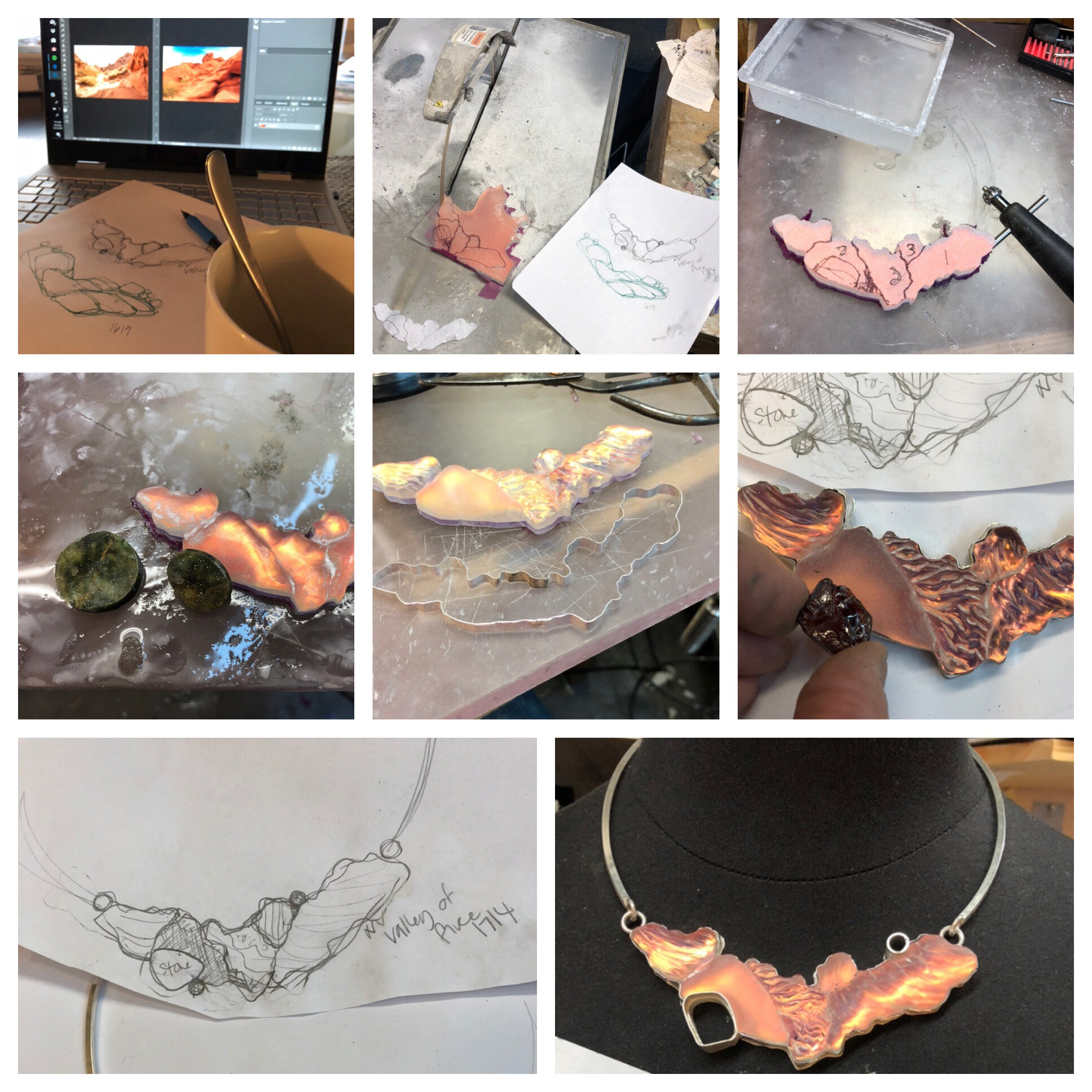
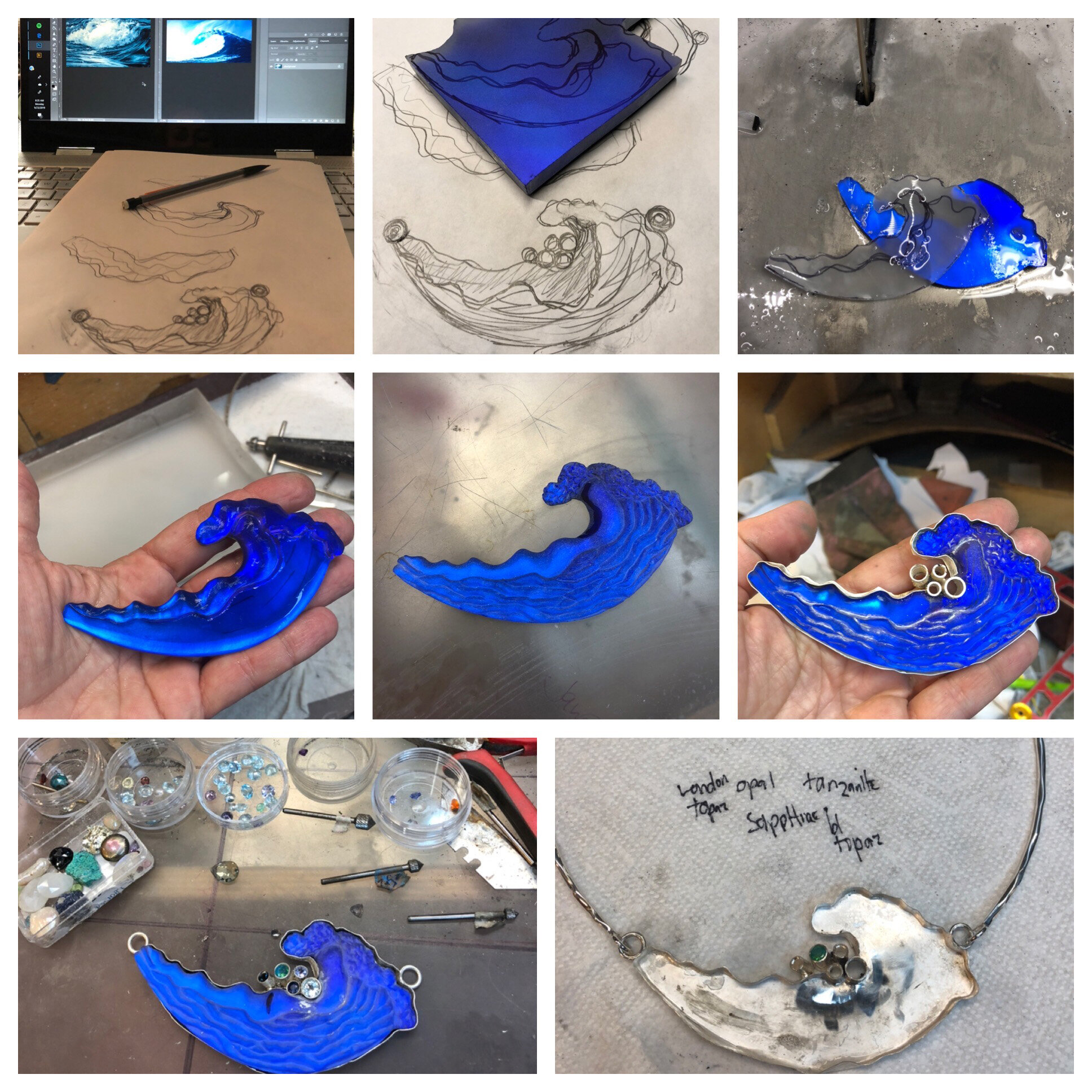
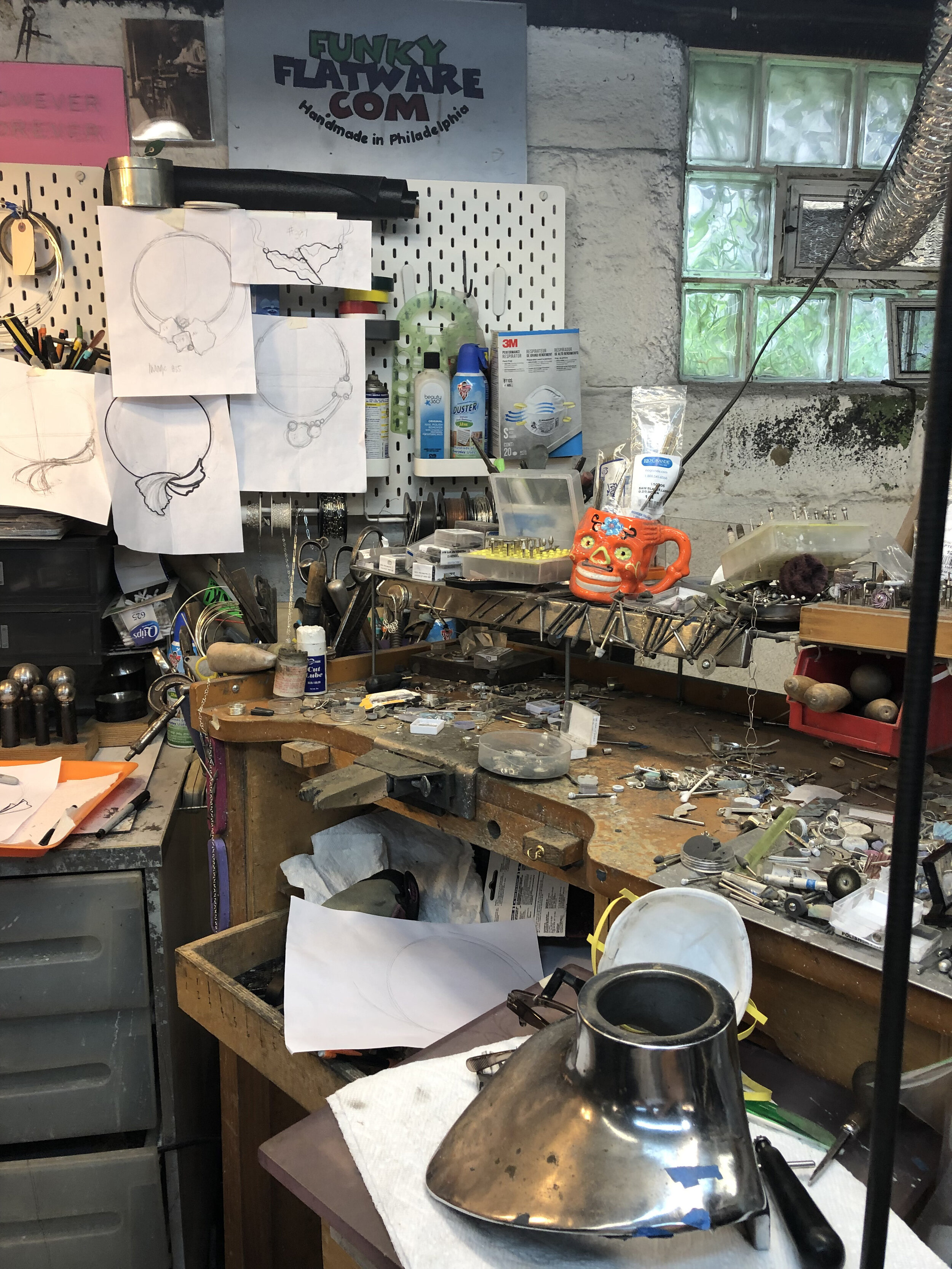
My process begins with a specific inspiration or idea. Surrounding myself with images of that inspiration, I do some preliminary sketches, keeping several sketchbooks around and often working a few trains of thought at any given time.
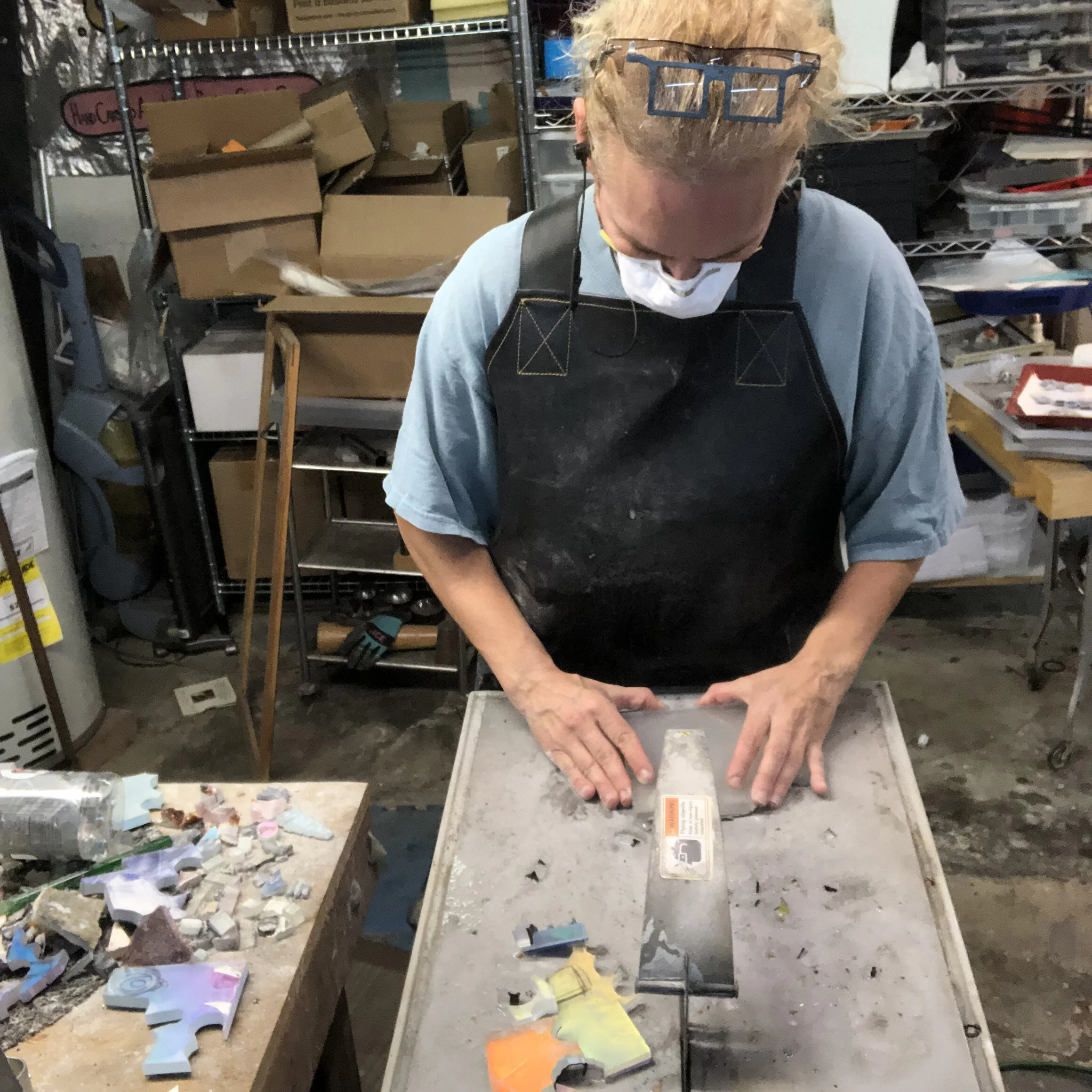
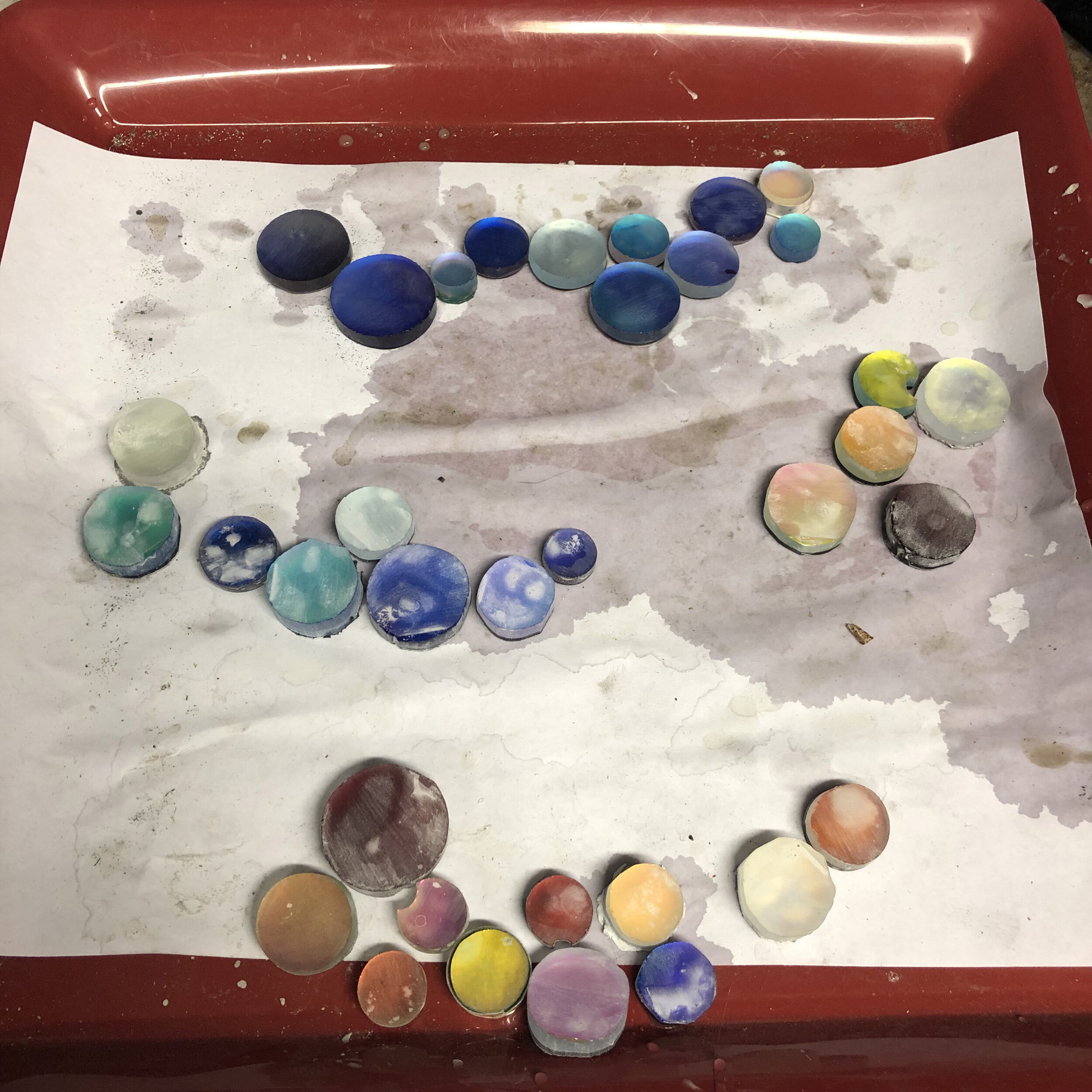
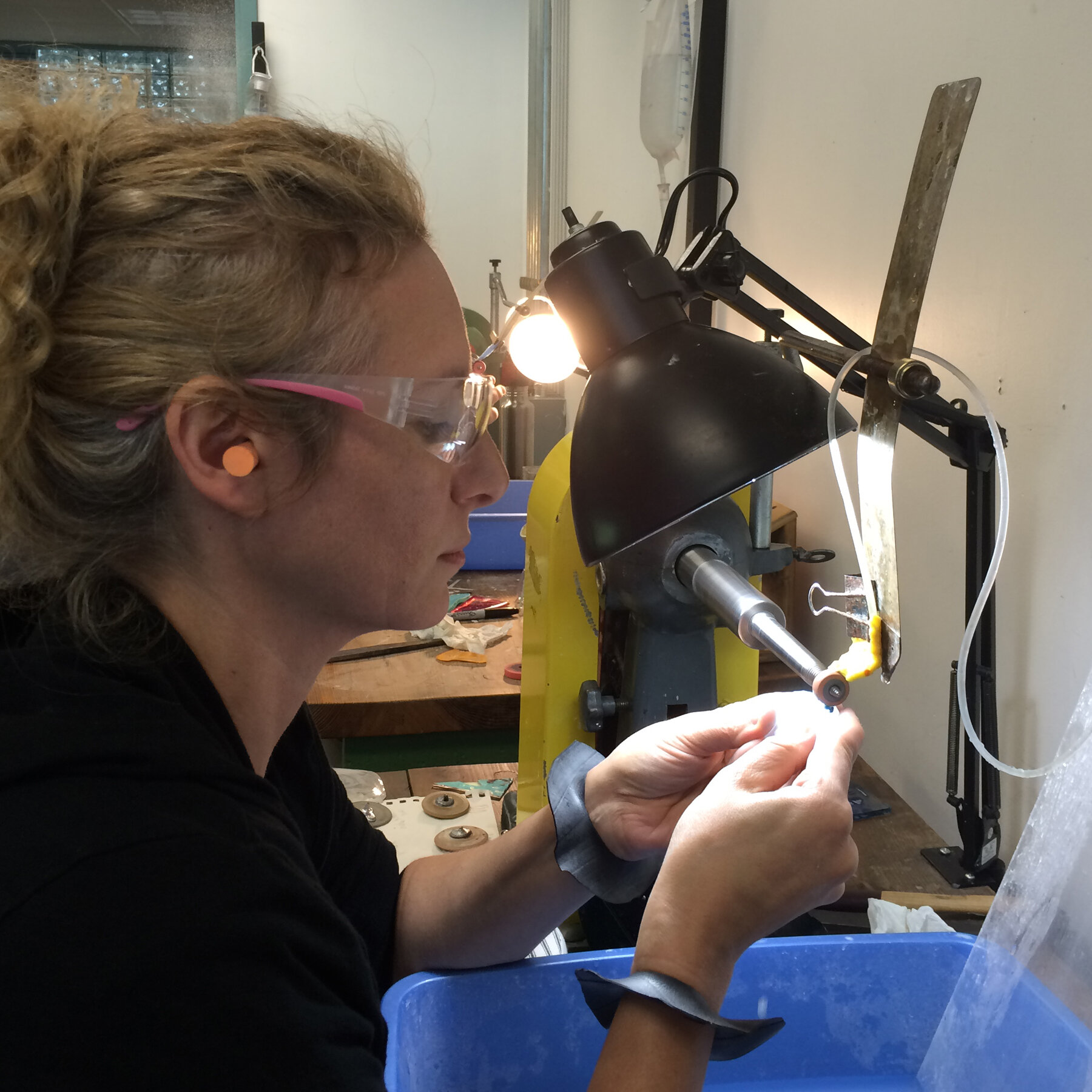
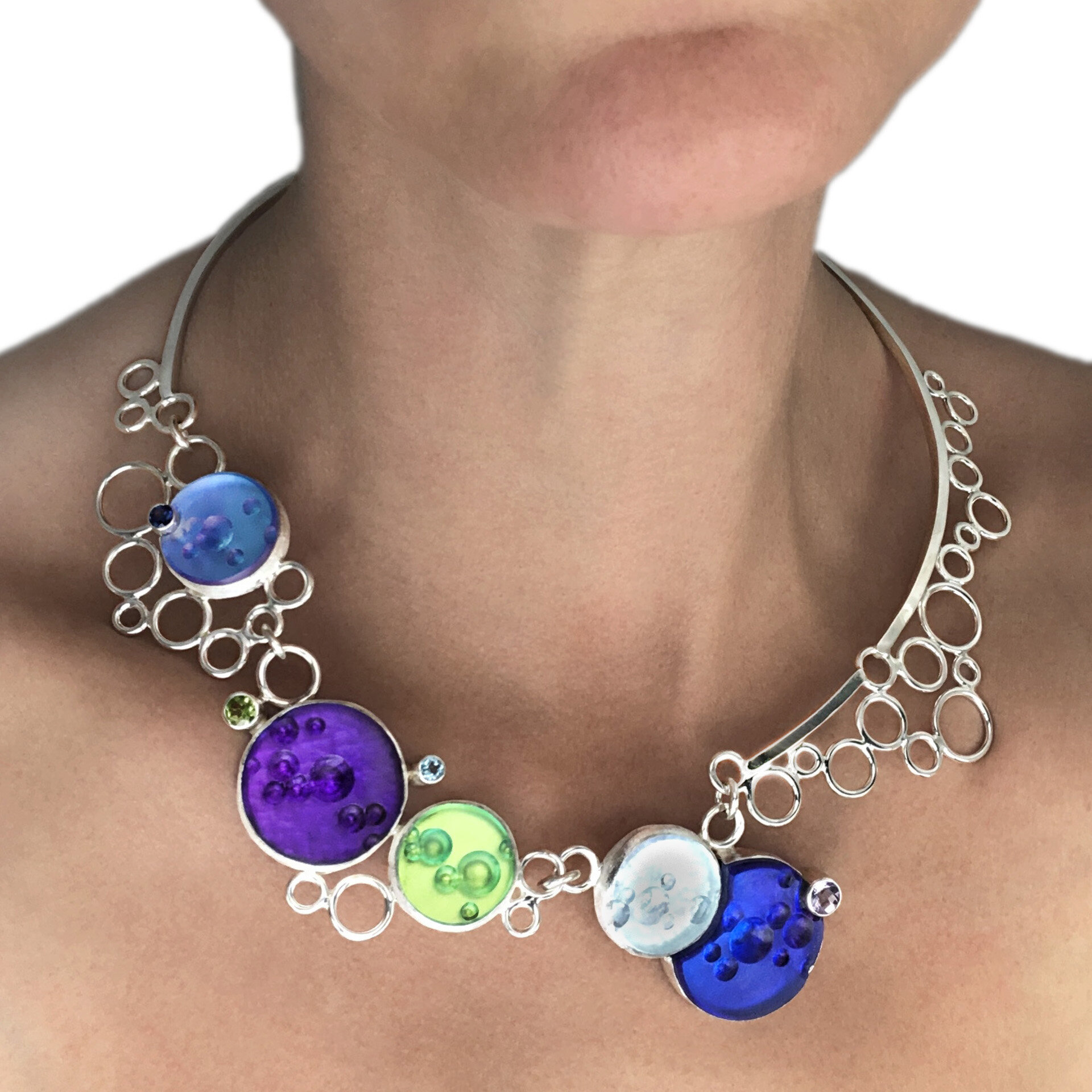
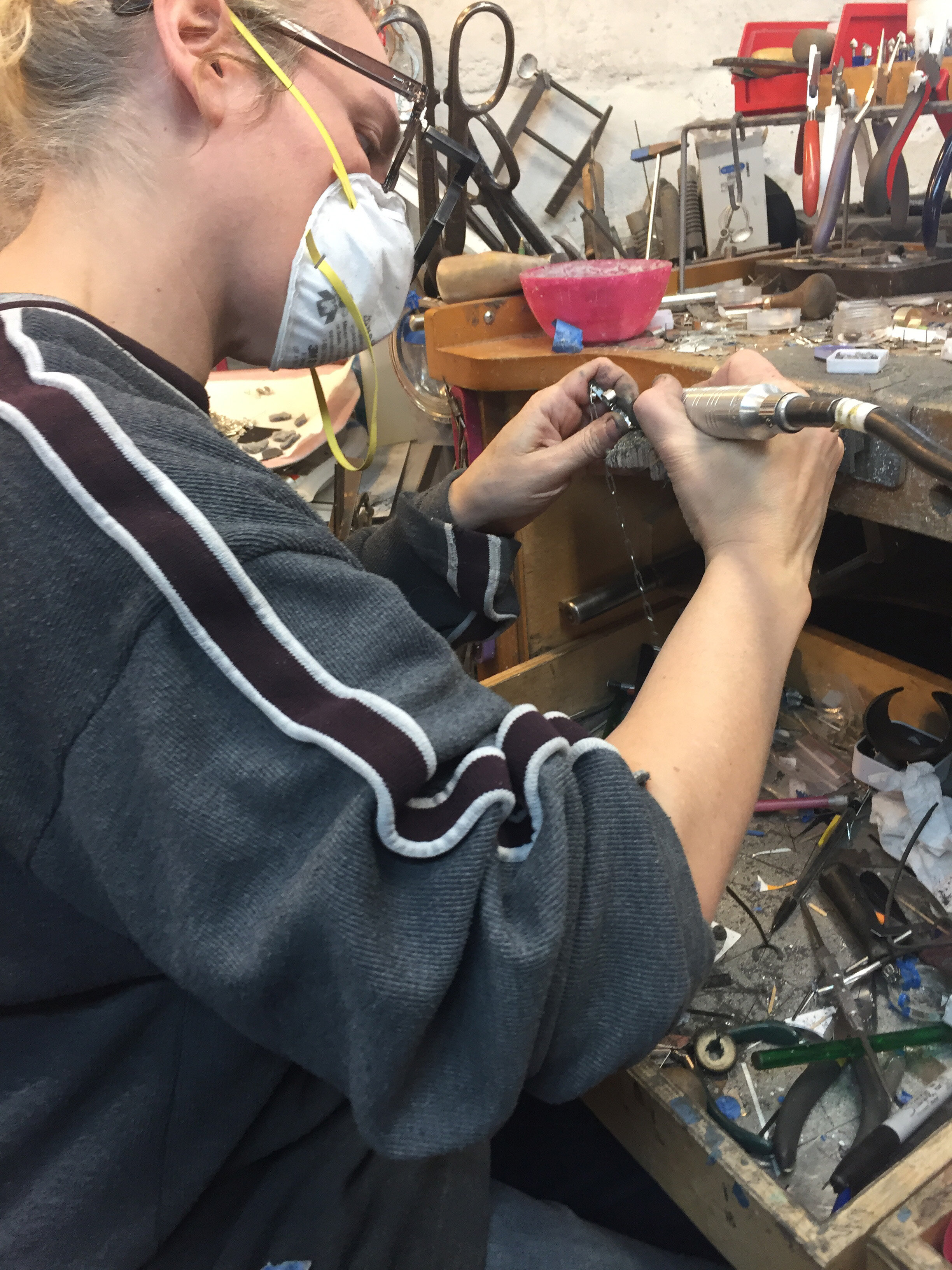
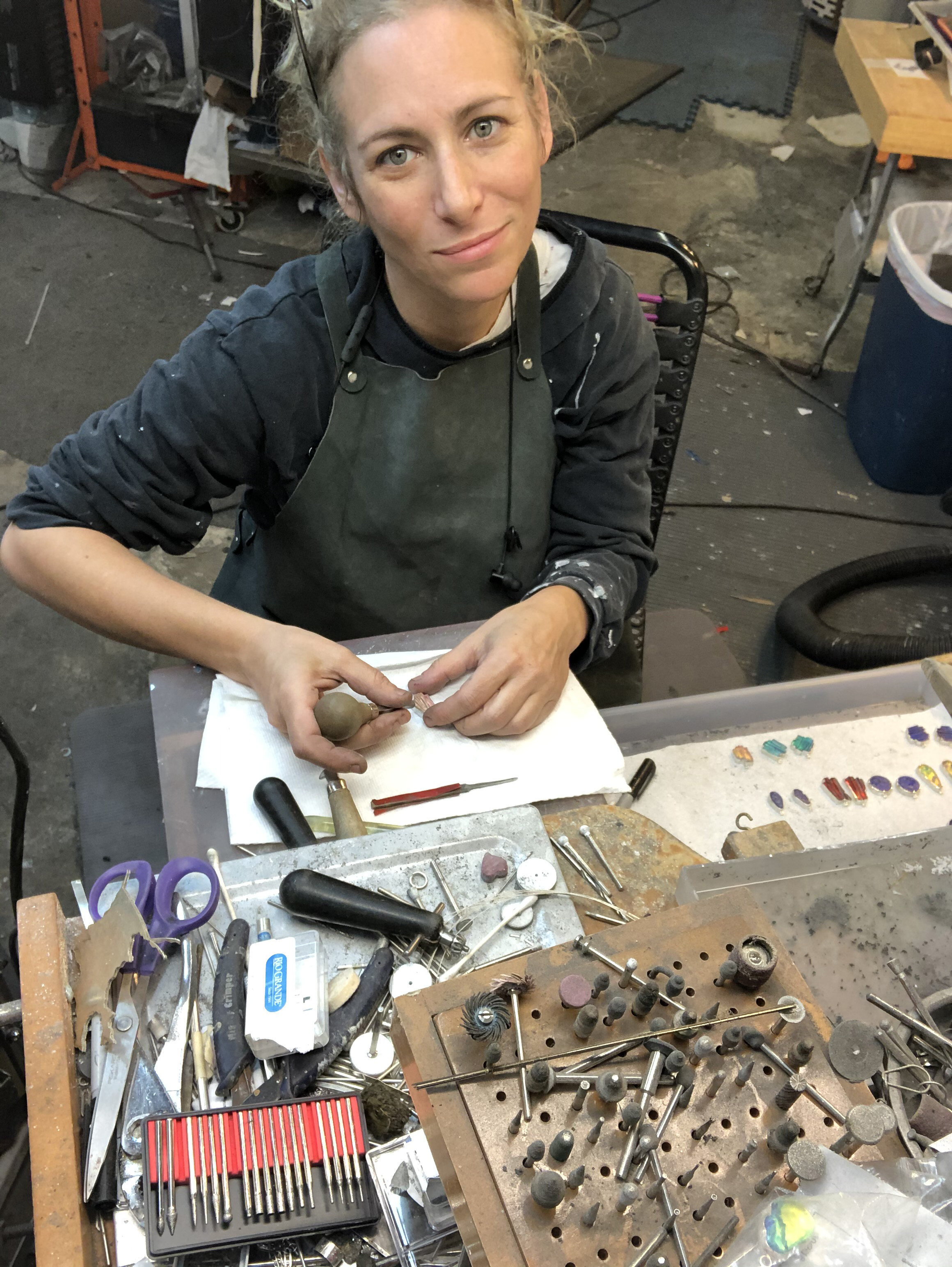
The cold-worked glass comes first: several sheets of colored glass are laminated to a thicker block of optical glass. The top layer of optical glass acts as a prism, amplifying light as opalescent color shifts and unfolds. Once the color is formulated to my liking, I cut the glass with a wet diamond saw, then shape the pieces using flat lap wheels that grind the glass with a combination of carbide grit and water. Engraving comes next, using a slow spinning lathe cooled by water with stone, diamond, or copper wheels to carve my designs into the surface. This lapidary approach to glasswork is central to what makes each piece truly one of a kind.
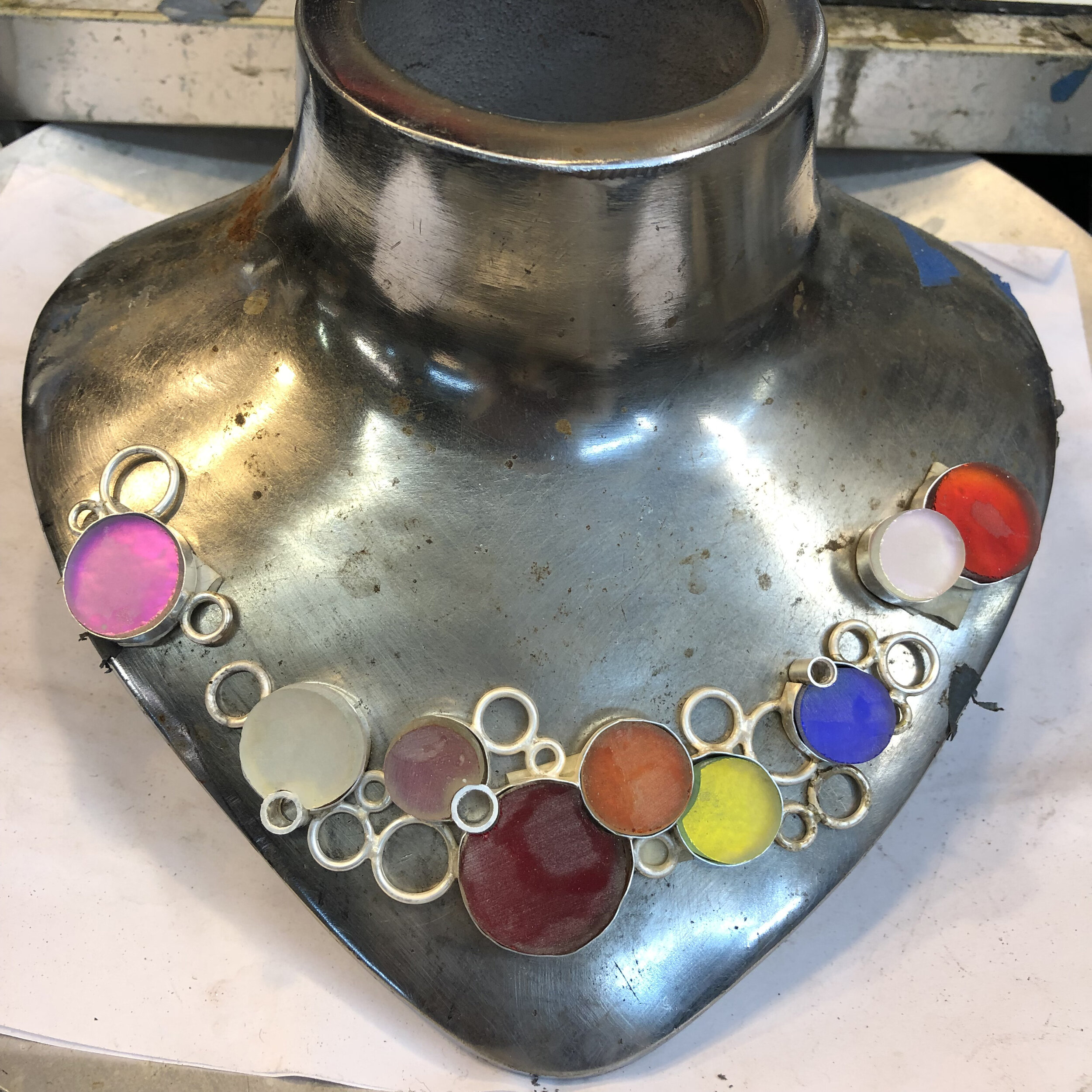
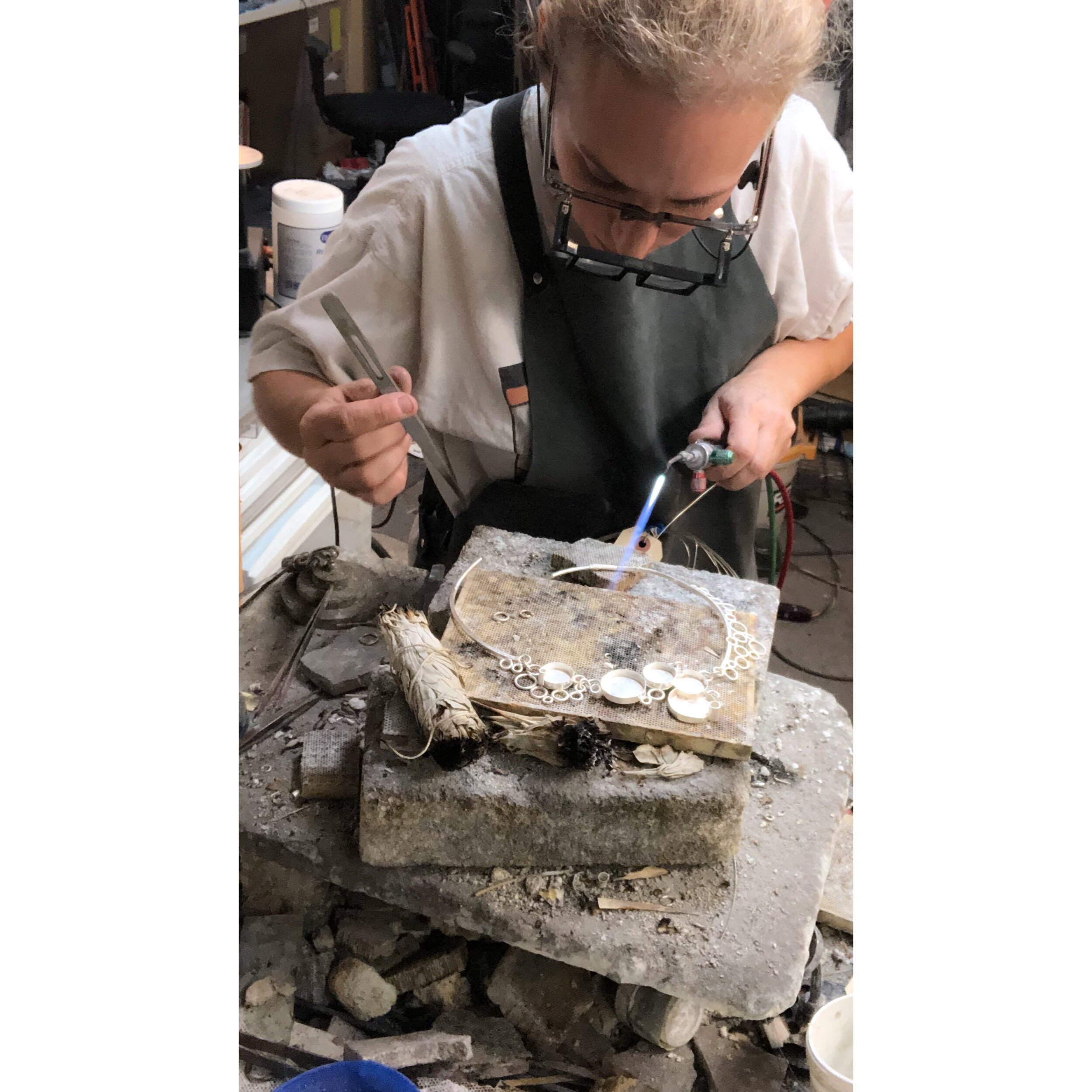
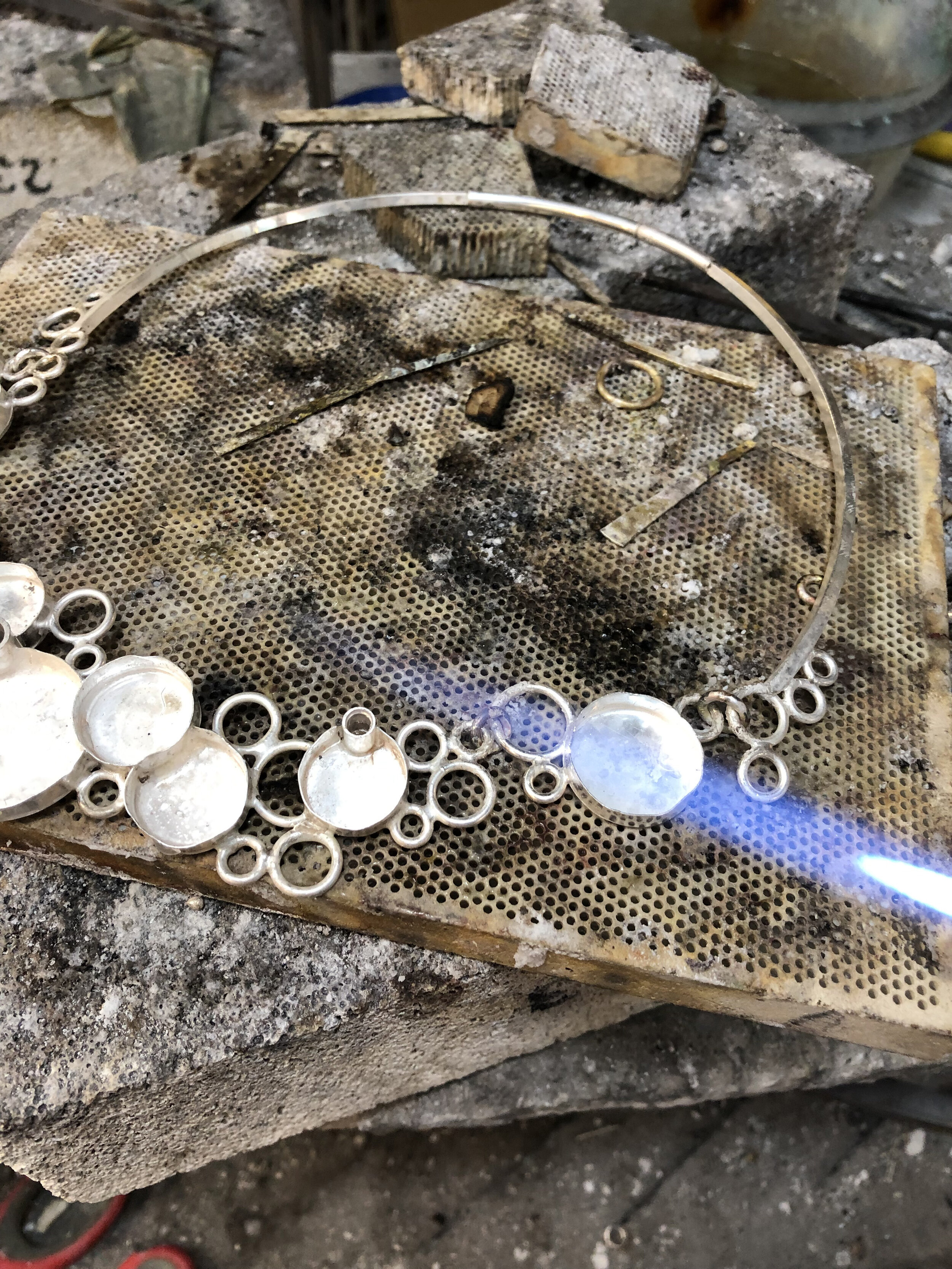
With the glass work complete, I turn to the metal. Every setting is hand-fabricated in sterling silver, and once fully constructed, I carve back into the glass to create the recesses where the stones and metal will rest. All the sterling components are soldered together, then sanded, filed, and brought to a finish. The final decision is which parts of the glass to polish, and then the glass is carefully set and the finished piece is signed and copyrighted.
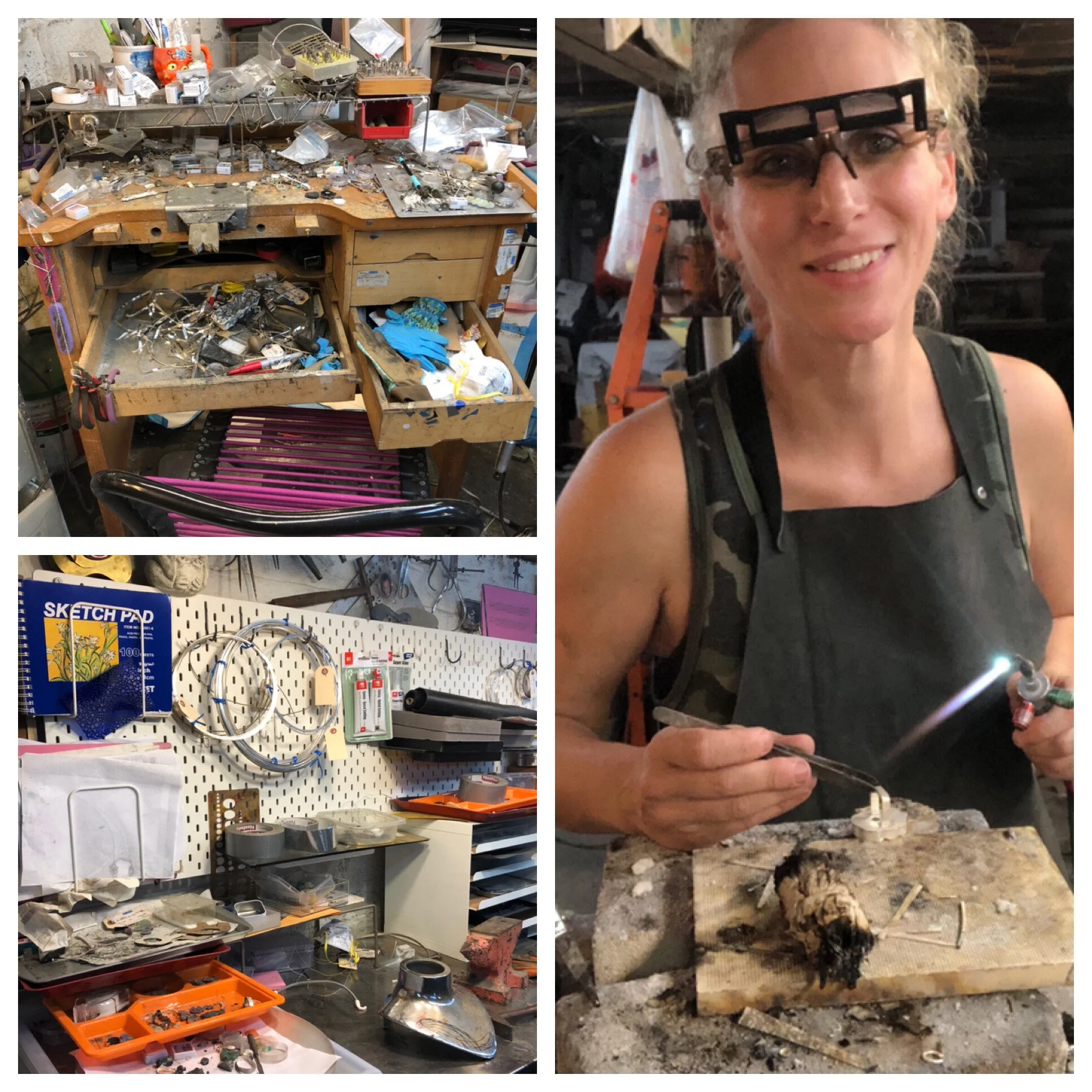
I think of it as conducting a conversation between glass, metal, and stone, with intention, each element contributing to the movement, balance, and depth of the piece. The result is wearable art, made entirely by hand, from start to finish.