
Starting Over Every Year: Behind the Scenes of a Juried Art Show Lifer
Starting Over, Again
With my 2025 show season officially wrapped, I’m back in that familiar, slightly anxiety-inducing place every art-show artist knows well: starting from scratch. The applications for next year are already out in the universe, waiting for results. Because every show I do is juried, each year is a gamble (which is insane, because if you know me at all, I'm not a gambling-kinda-gal). I never know what my schedule will look like until the decisions roll in. I throw all my cards into the air and hope something lands.
The Weight of a Few Images
The process begins months in advance. I obsess over creating what I hope will be the perfect set of images—usually three to five pieces that coordinate and tell the story of my work. These images carry a ridiculous amount of weight. I agonize over which pieces to include, their order, the color palette, and how the lighting falls. And then… I submit and wait. There's almost never any actual feedback, which adds to the stress—just acceptance, rejection, or the dreaded waitlist.
One year, I was waitlisted almost across the board. It’s exhausting, stressful, and occasionally humbling. Aside from joking that I could always fall back on pet sitting, my temperament and skill set make me virtually unemployable in a conventional job. Messy, unpredictable, and occasionally infuriating—yep, this is the life I signed up for.
How Jurying Actually Works
The jury process itself is a world of nuance. Artists log in to Juried Art Services or Zapplication, upload images, and submit written materials—each show with slightly different requirements. Some ask for just three images plus a booth shot (my least favorite—how is anyone supposed to capture the full range of their work in three images?), while others request four or five images plus a booth shot for a fuller picture. Artist statements range from 100 characters to 1,000 (most being the 100-character limit—and again, try explaining your life’s work in 100 characters, lol). Jurors—often a mix of award-winning artists, curators, collectors, academics, and gallerists—score submissions to curate the show. And maybe it’s an un-PC thing to say, but I can often tell what the backgrounds of the jurors were by who gets selected.
Subjectivity, Bias, and Luck
I’ve sat on several juries myself, and the pressure to assemble a strong show is immense. Art is completely subjective, and jurying is always a gamble. Results depend on available spots, returning award winners, and the particular tastes of the jurors. Competition is fierce—especially in jewelry, where the applicant pool is stacked with exceptional work.
My own work, being fairly unique, can be a double-edged sword: it either resonates with the jury, or it doesn’t. Sometimes I swear (and this may be entirely my own perspective) that my bright colors don’t fare as well when a jury skews heavily cis-white male—but who knows? There’s constant chatter among artists about which colors to avoid in jury images, and as someone whose work is all about color, I find that line of thinking deeply crippling.
Juries aren’t supposed to judge based on personal taste, but jurors are human, and to say that taste doesn’t factor in would be naïve. Sometimes, when I look at the list of artists accepted into shows I didn’t get into, I can understand why I wasn’t chosen—especially when the jury’s preferences seem to lean in a clear direction.
Last year, I sat on a jury for a major show. When my own images appeared on the screen, the juror sitting next to me leaned over and said, “What is that?” I like to think I have a pretty thick skin after all these years, but—ugh. My heart sank. My stomach dropped. To say it hurt would be a complete understatement.
“Um,” I said sheepishly, “those are mine.”
That moment gave me what I can only describe as a little bit of jury-image PTSD.
Looking Back to Keep Moving Forward
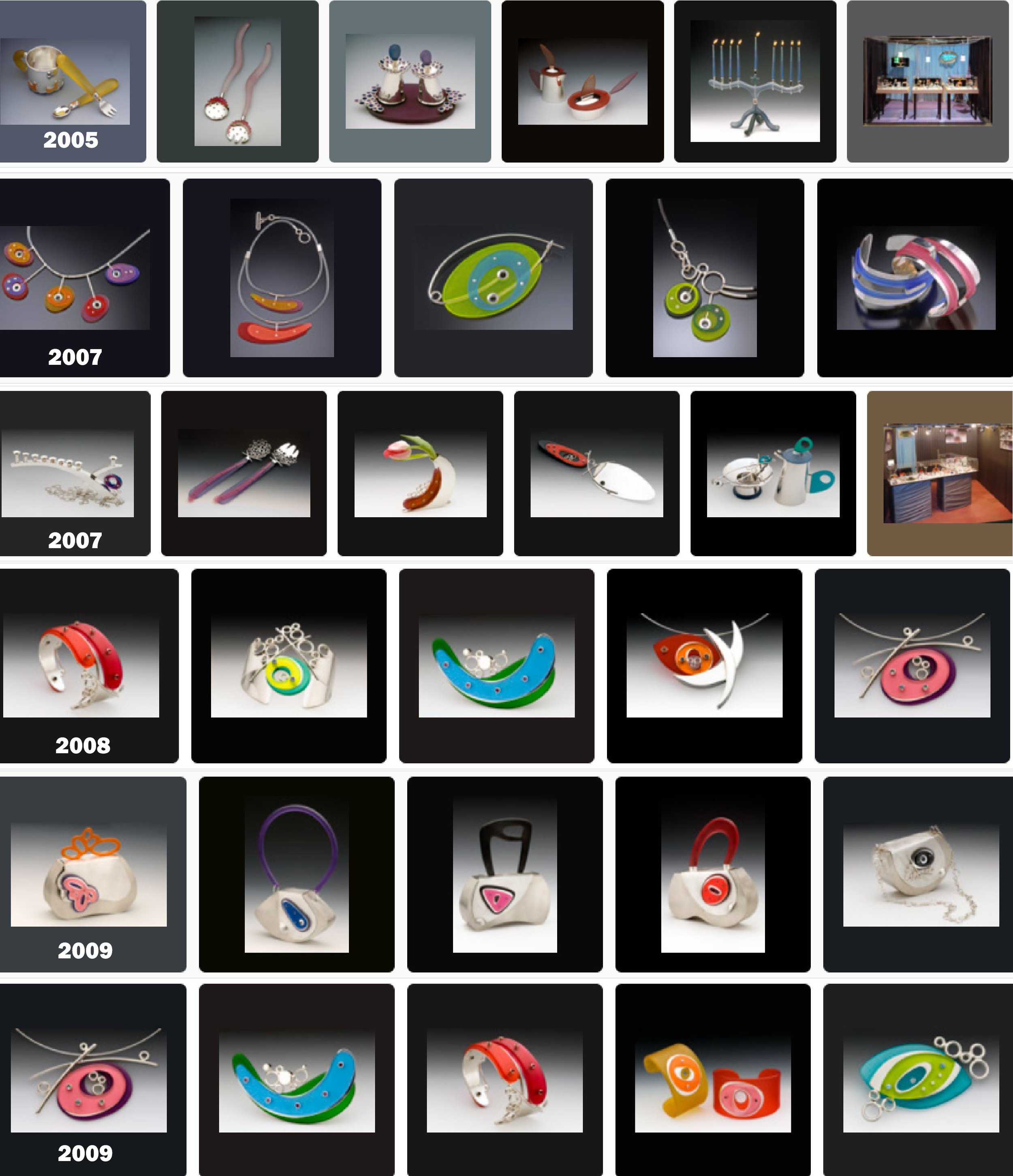
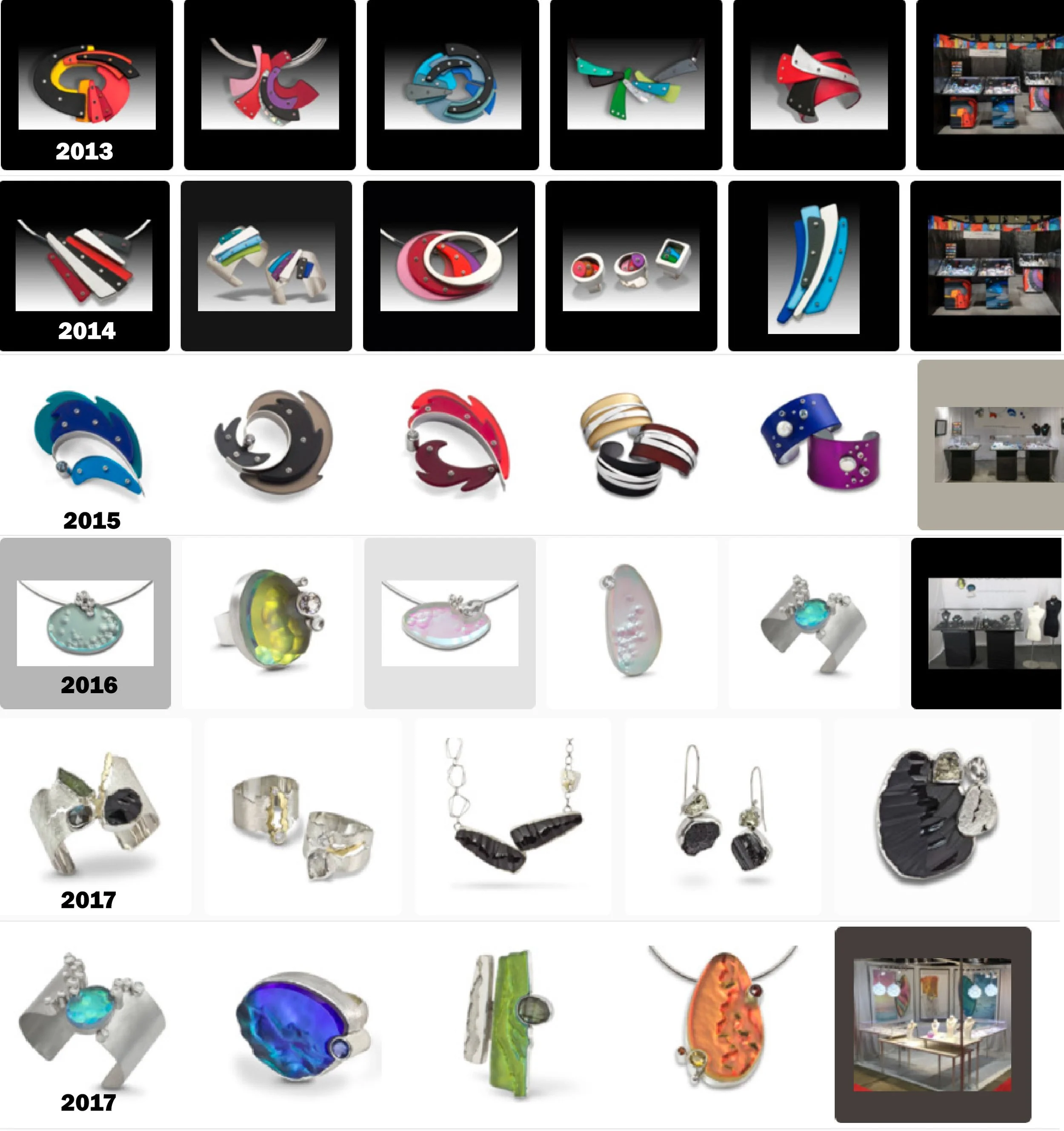
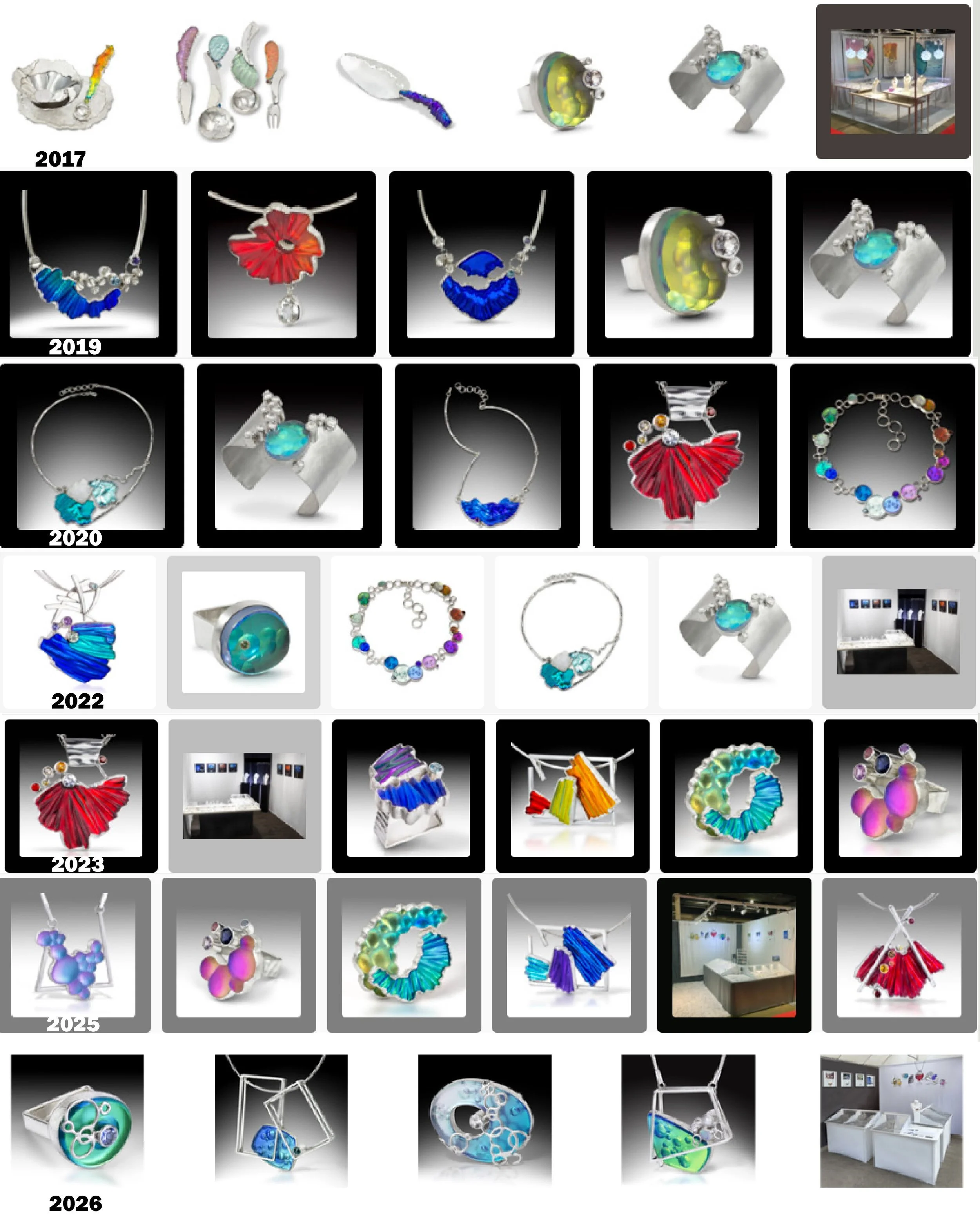
Through it all, the thread that keeps me going is evolution—and sometimes the rejections fuel that evolution even more than the acceptances. Looking back at twenty years of jury images, it’s fascinating to see how my work—and how I present it—has changed. Some pieces that once felt daring now look tame; others remind me how far I’ve pushed my craft and my vision. Every rejection teaches me something, and every acceptance feels hard-earned.
Years ago, an artist I admire told me that it’s hard to break into the top echelon of shows—but it may be even harder to stay there. Those words stick with me. Staying means paying attention. It means figuring out what I think juries seem to respond to, balancing that with what I actually want to make, and then hoping the two come together in a way that feels right—and, first and foremost, maintains my own artistic voice.
Looking back, my career hasn’t been a straight climb—it’s been a series of tweaks, pivots, and occasional leaps of faith. Evolution, for me, isn’t about chasing trends or sticking to one look—it’s about experimenting, refining, and keeping the work moving forward. That’s what keeps me going, even when the results don’t go my way.
And so, every year, no matter the rejections or the surprises, I start again—curating, photographing, applying, and hoping that the next jury sees the story I’m trying to tell. I start from scratch, and somehow, that’s exactly what keeps me moving forward.
Choosing This Life Anyway
All of the images I’m sharing here were pulled directly from actual Juried Art Services applications. You can see my evolution over the past twenty years—though the very beginning is tricky to show, since those pieces were shot on film and submitted as slides, so the images from my first five or so years aren’t represented here. Over time, my work has wandered through a number of categories: mixed-media 3D, metals, and jewelry. I still love making objects, and I still think of myself as an object maker… but that’s a whole other blog for another day.
Also: not sure what crack I was smoking in 2007, but I didn’t keep those jewelry images around for long. In 2016, I officially switched mediums from acrylic to glass—and I still have a soft spot for those first glass pieces. The colors were subtle and iridescent and incredibly hard to photograph, but I loved them in real life, and I still do.
And if you scroll down through all the images, you can watch the story of this evolution unfold for yourself—missteps, experiments, and all. Sometimes the “starting from scratch” isn’t really starting from scratch—it’s building on all the past successes, and failures.
I’ll say a little prayer to the show gods (feel free to join me, lol)… and look forward to a fresh start in 2026!
Enjoyed this post? Join my studio newsletter for new blog posts, new work, and behind-the-scenes updates. Sign up below!