What is cold worked glass, anyway?
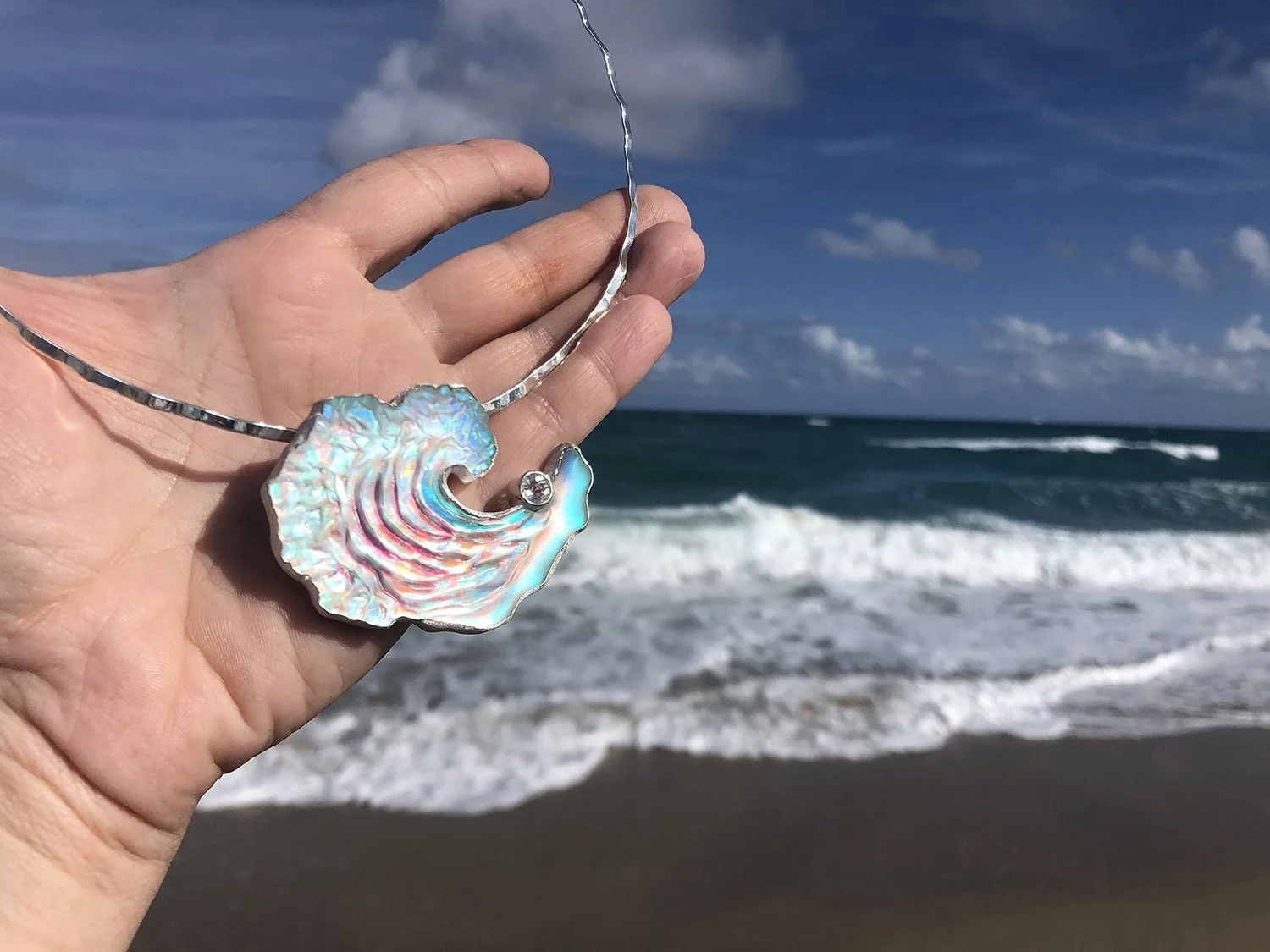
Not Your Typical Glass
When most people hear “glass jewelry,” they picture something blown, fused, or tumbled smooth by the ocean. Processes where the glass is, at some point, liquid.
Cold worked glass is never liquid.
It isn’t shaped by heat or found on a beach. It is carved slowly and deliberately, with water-cooled tools, from solid glass, one piece at a time. The process is closer to lapidary work than to anything most people associate with glass, sharing the same meditative, physical relationship between tool, material, and maker.
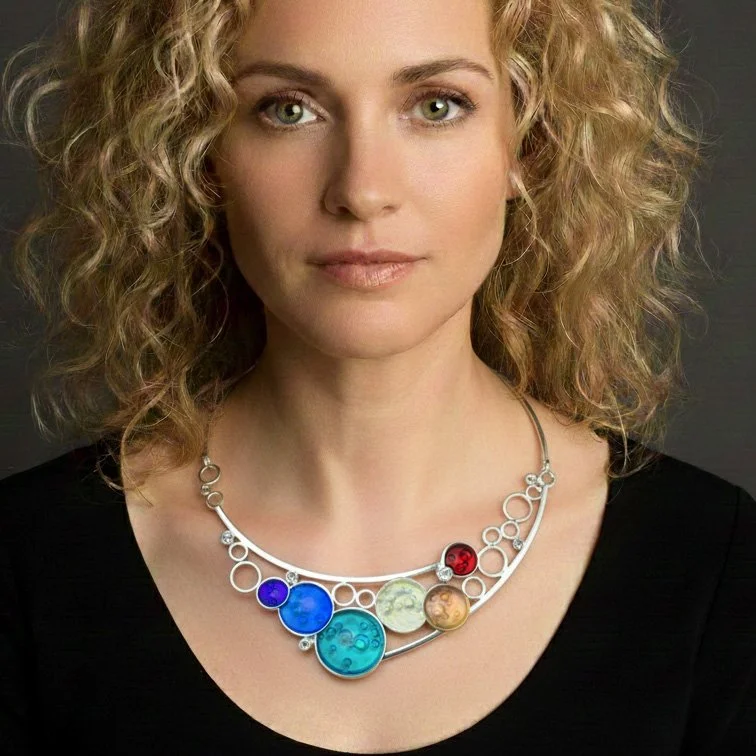
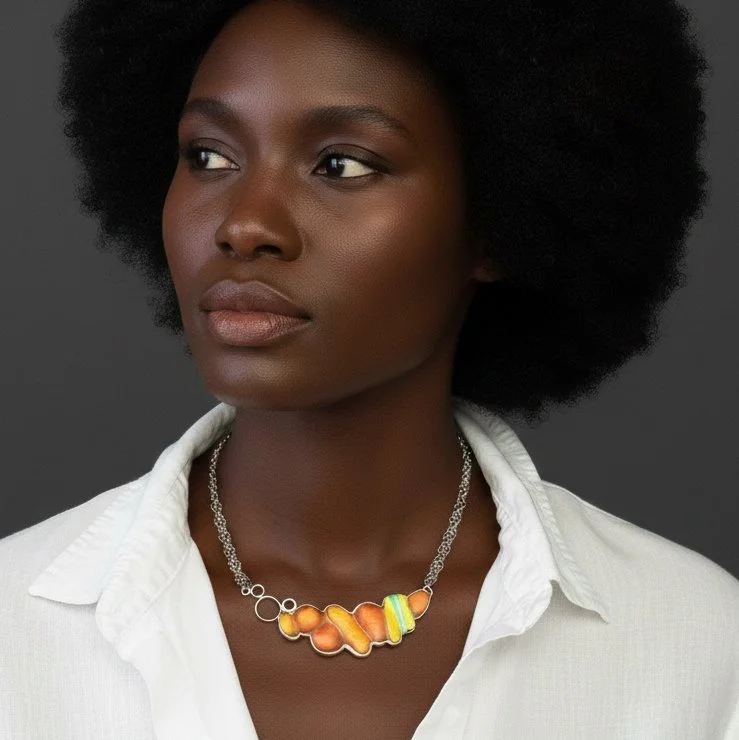
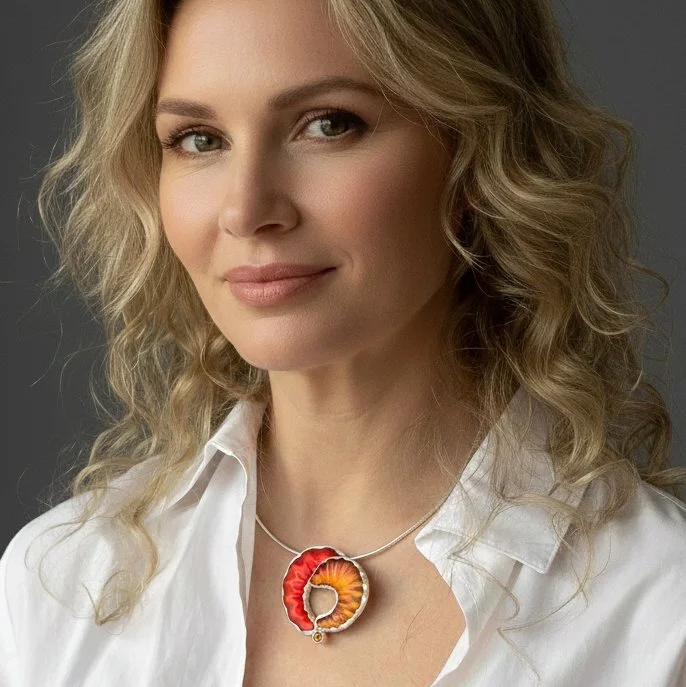
The result behaves unlike any other material used in jewelry. With no molds involved, each piece is entirely handmade and truly one of a kind.
How I Got Here
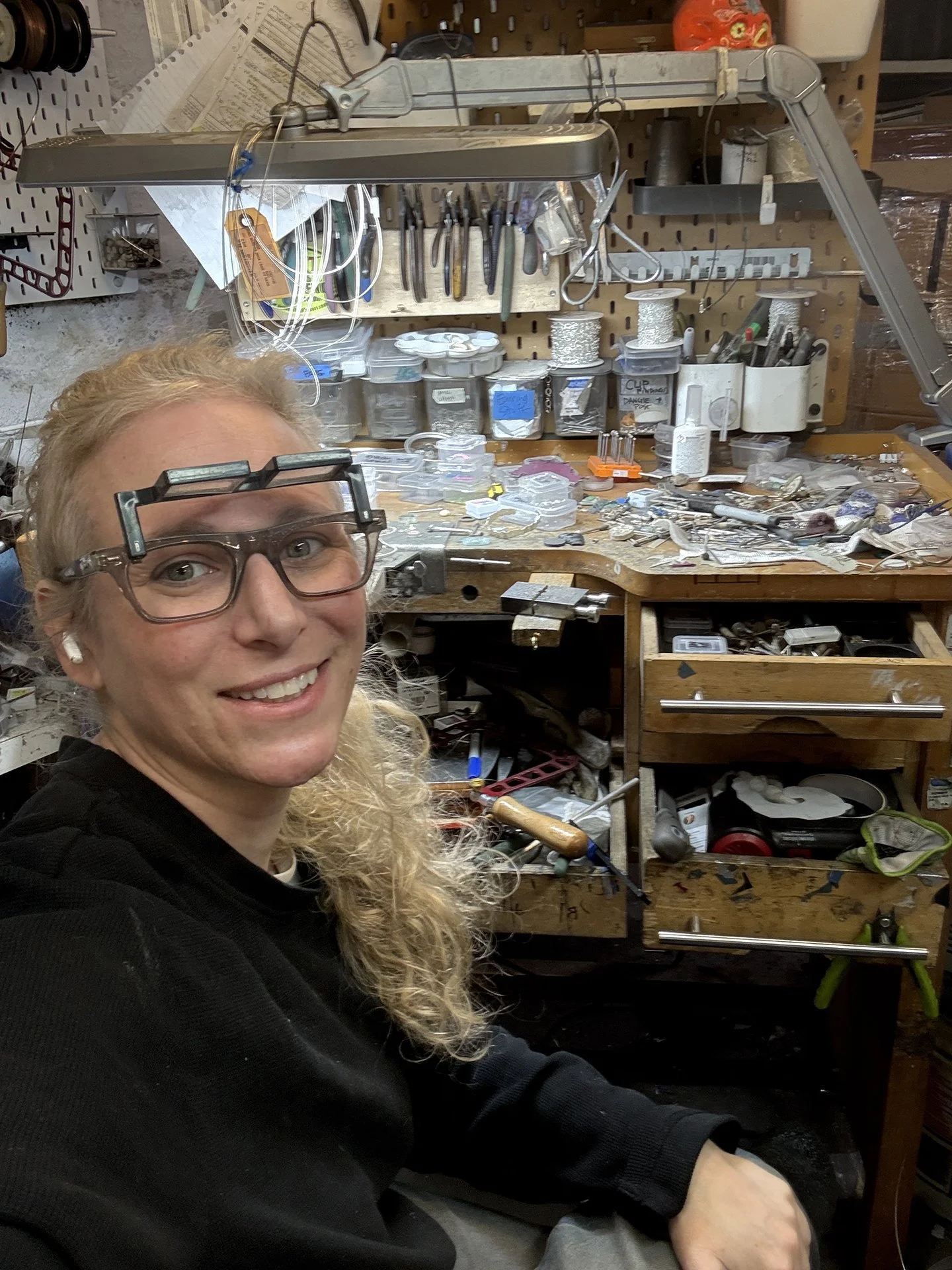
I didn’t come to glass directly.
For the first decade of my career, color in my work meant plastic. Carved acrylic combined with sterling silver became my signature. Vibrant, lightweight, endlessly workable. I loved it enough to write a book about it.
When I got pregnant with my son, something shifted. The more I thought about toxicity, microplastics, and the ecological weight of the material I had built my practice around, the more I knew I needed to find something new.
Many of my clients already know that my husband is Czech, and a glass cold-worker, which sounds like an obvious solution in hindsight. But I resisted. I didn’t want to work in his medium. I needed to find my own way in.
On a trip to the Czech Republic to visit his family, we stopped at a glass factory to see some of his former classmates. One of them was an engraver. I had never seen glass engraving before. I didn’t even know it existed. Something about it stayed with me.
Years later, I found a class at the Corning Museum of Glass and signed up, not even sure I would like it. The moment I sat down at the engraving machine, it felt familiar. The same meditative, physical quality I had always loved in lapidary work.
Everything clicked.
That Was the Beginning
It has taken years of experimentation to arrive at the work I make today, and I mean that more literally than it might sound.
Not coming from the glass world turned out to be an unexpected advantage. Without formal training, I had no inherited rules to follow, no established methods to default to. That freedom allowed me to push the material in directions a more traditional path might have discouraged.
My background in metal gave me a foundation, but glass demanded something different. It required me to build a new language from the ground up. I knew I wanted color. I knew I wanted luminosity. Beyond that, I just started playing. What happens if I combine these? What does this material want to do? Years of that kind of open curiosity is what eventually produced the glass slab I work from today, something I had never seen used in jewelry or art glass making before. I wasn't trying to solve a problem. I was following the material wherever it wanted to go.
What Cold Working Actually Is
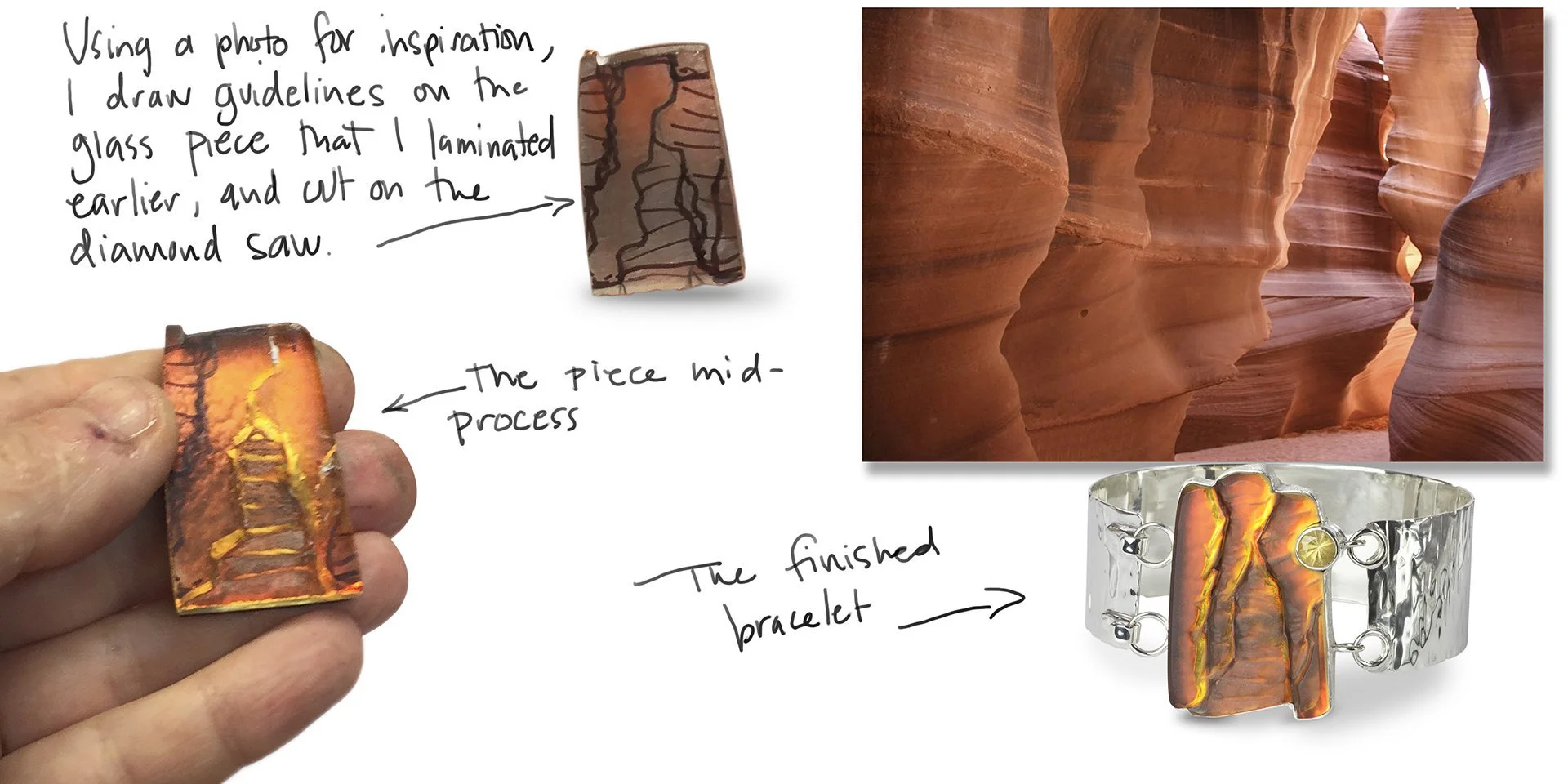
Cold worked glass is exactly what it sounds like. Glass shaped entirely at room temperature, with no heat involved.
While other glass disciplines rely on heat to make glass malleable, cold working treats it as a solid material to be carved and refined. The glass never softens. I remove material through cutting, grinding, and abrasion, shaping something that remains rigid at every stage.
Every tool I use runs with a continuous flow of water or operates with the glass fully submerged. The water prevents heat buildup and carries away the fine particles created in the process. It feels closer to lapidary work, or carving gemstones than anything most people associate with glass.
The tools range from diamond saws and wheels to a progression of abrasives and polishing surfaces. Each stage refines the last. Diamond tools shape the form, but leave the surface rough. The finish is built slowly, moving through finer and finer grits until the glass reaches its final clarity.
It is a demanding process. Glass is unforgiving, sensitive to heat and friction, and it cannot be rushed. Yet that same structure is what gives it unexpected strength. Each piece is laminated, with layers bonded together so the glass does not shatter easily. Instead of breaking apart, it tends to hold, making it far more resilient than most people expect.
That is also what gives the work its precision.
Every decision is permanent.
The Real Magic Happens When You Wear It
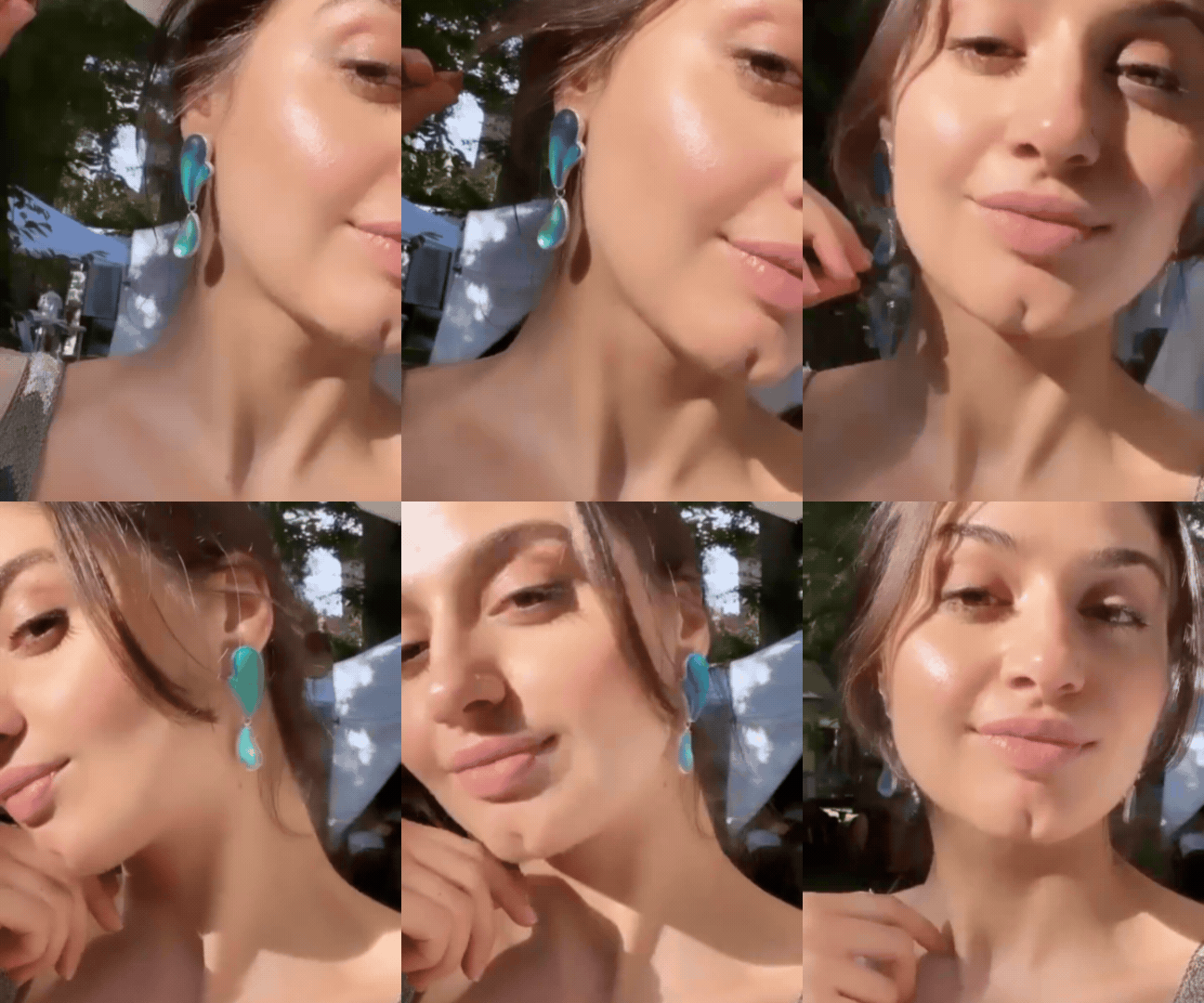
Glass reveals itself fully in motion.
Each piece is built in layers. Beneath the surface sits a combination of dichroic glass, iridescent glass, and colored art glass. Materials already rich with complexity.
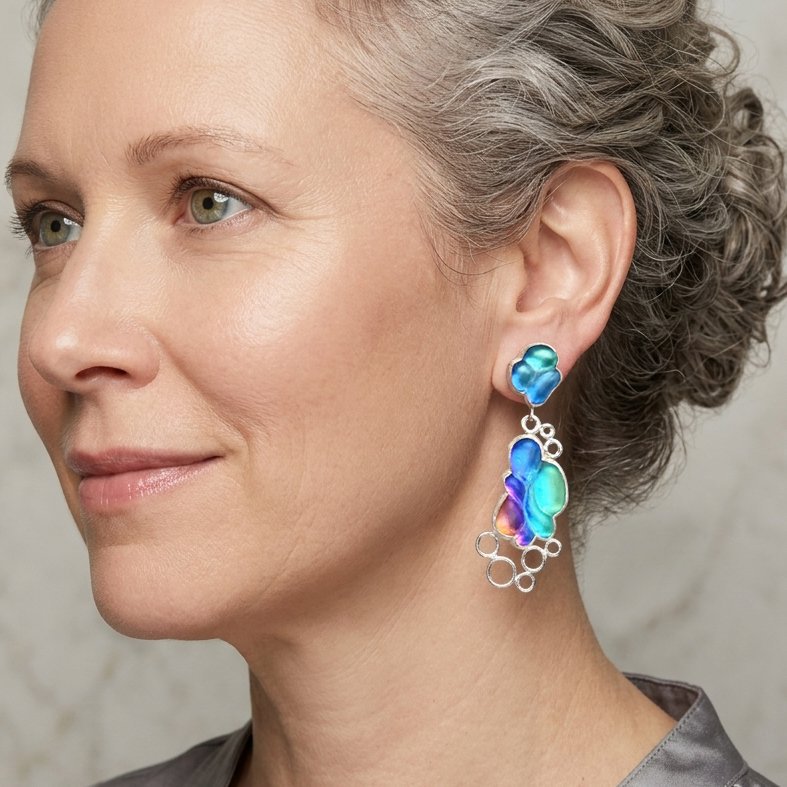
At the surface is optical glass, the same exceptionally clear material used in camera and telescope lenses. It acts as both a window and a lens, revealing the layers beneath while bending and refracting light as the piece moves.
This is where the depth comes from. Shadows shift. Colors appear and disappear. What looks subtle at rest becomes dynamic in motion.
Nothing is painted or applied.
It is simply light moving through material.
Solid, but never static, glass holds movement in place while allowing it to unfold over time. Each piece changes with the wearer, responding to light, angle, and motion in a way that makes it feel quietly alive.
Why This, Why Now?
The obvious question is why. In an age of waterjet cutters, laser cutters, 3D printers, and AI-generated design, why choose a process with this many steps, this much time, this much physical demand?
When I made the switch to a new medium, I had to make a decisive choice: lean into technology, or create something completely handmade. At a moment when so much of what we call handmade is being absorbed by CAD files and production runs, cold working sits entirely outside that world. It cannot be automated. It cannot be scaled. Every mark is made by hand, at a pace no machine would bother with.
That is not a limitation — it is the point.
What I hope a collector holds onto is not just the piece itself, but the awareness that someone sat down, slowed down, and made it — completely, irreducibly, by hand.
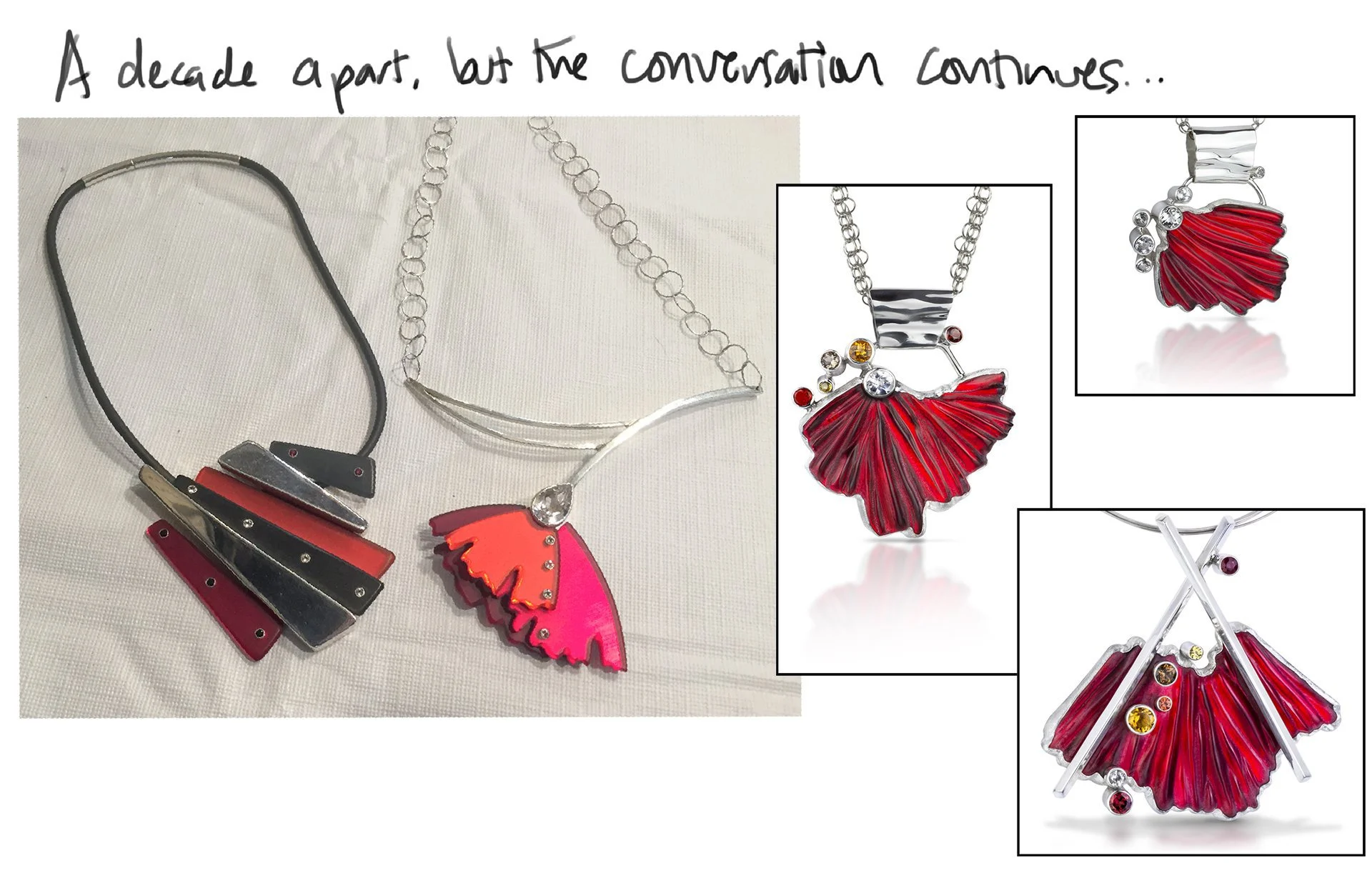
Two pieces of jewelry made with acrylic vs, my newer work with glass.